Understanding infertility testing

When pregnancy is taking longer than expected, testing can help provide clearer answers. A personalized evaluation looks at the different factors involved in conception so you and your care team can better understand what may be affecting your fertility and determine your next steps.

Image placeholder

What is infertility testing?

Fertility depends on several factors working together, which means there isn’t one test that can provide every answer. An infertility evaluation looks at different aspects of reproductive health to identify factors that may be making pregnancy more difficult.  

Your medical and reproductive history also helps your fertility specialist determine which tests are appropriate for you.  

Sometimes testing identifies one clear factor. In other cases, more than one factor may be involved. The goal is to build a complete picture of your fertility so treatment recommendations can be personalized to your individual needs. 

Image placeholder

What’s evaluated during fertility testing?

Your fertility evaluation is tailored to your medical history and individual needs. Depending on your family planning and medical needs, your care team may recommend tests that assess ovarian reserve, ovulation and hormones, the uterus and fallopian tubes, sperm, and other genetic factors.

Ovarian reserve: Bloodwork and ultrasound can provide information about the number of eggs remaining in the ovaries and how the ovaries may respond to fertility medications. Tests may include anti-Müllerian hormone (AMH), follicle-stimulating hormone (FSH), estradiol, and an antral follicle count (AFC).  

Ovulation and hormones: Bloodwork and ultrasound may help determine whether ovulation is occurring and evaluate hormones involved in the menstrual cycle.  

The uterus and fallopian tubes: Imaging or other procedures can help identify concerns such as fibroids, polyps, scar tissue, uterine abnormalities, or blocked fallopian tubes.  

Sperm: A semen analysis evaluates sperm health and may be part of a fertility evaluation when sperm is part of the reproductive plan.  

Genetic factors: Genetic testing may be recommended in some circumstances based on your history and clinical needs.


Image placeholder

Could infertility testing be right for me?

You don’t need to wait until you have all the answers to talk with a fertility specialist. Testing may be appropriate if you’ve been trying to become pregnant without success, have irregular or painful periods, have experienced pregnancy loss, or have a known condition that may affect fertility.  

Your first consultation can help determine which tests are appropriate based on your age, medical and reproductive history, previous pregnancies, menstrual cycles, and family-building goals.

Even if one potential cause is already known, additional testing may be recommended because more than one factor can contribute to infertility.

Image placeholder

Understanding the infertility testing process

While fertility testing is personalized, knowing what to expect can help make the process feel more manageable. Our supportive team of experts are here for you through every stage and assessment.

1

Image placeholder

Start with your history

Your fertility specialist will review your medical and reproductive history, including your menstrual cycles, previous pregnancies, health conditions, medications, and how long you’ve been trying to conceive. This information helps guide the tests recommended for you.

2

Image placeholder

Evaluate hormones and ovarian reserve

Bloodwork and ultrasound may be used to evaluate hormone levels, ovarian reserve, and follicle development. Some tests are performed at the beginning of your menstrual cycle, while AMH testing can be performed at other times during your cycle.

3

Image placeholder

Look at reproductive anatomy

Depending on your needs, your evaluation may include imaging or procedures to assess the uterus and fallopian tubes. Tests, such as a sonohysterogram or hysterosalpingogram (HSG), can show the shape of the uterine cavity and whether the fallopian tubes appear open.

4

Image placeholder

Review your results together

Once your testing is complete, your fertility specialist will review the findings with you, explain what they mean, and discuss whether treatment or additional evaluation may be appropriate.

Your care team, from clinic to lab

Image placeholder

The doctors at the heart of your care

Get to know the fertility specialists who bring deep expertise to your care while taking time to understand your unique history, journey, and goals

Image placeholder

Inside our embryology labs

Much of IVF happens beyond the exam room. In our labs, experienced embryologists closely manage fertilization and embryo development

Learn more about fertility treatment

Frequently asked questions (FAQs)

What tests are included in an infertility evaluation?

There isn’t one standard set of tests for every patient. Your evaluation is based on your medical history, reproductive health, and individual needs.

Testing may include:

  • Bloodwork to evaluate hormones and ovarian reserve  
  • Ultrasound to assess the ovaries, follicles, and uterus  
  • Testing to determine whether the fallopian tubes are open  
  • Evaluation of the uterine cavity  
  • Semen analysis  
  • Genetic testing when appropriate  

Your fertility specialist will explain which tests are recommended for you and what each one can tell you.  

What does an ultrasound show during fertility testing?

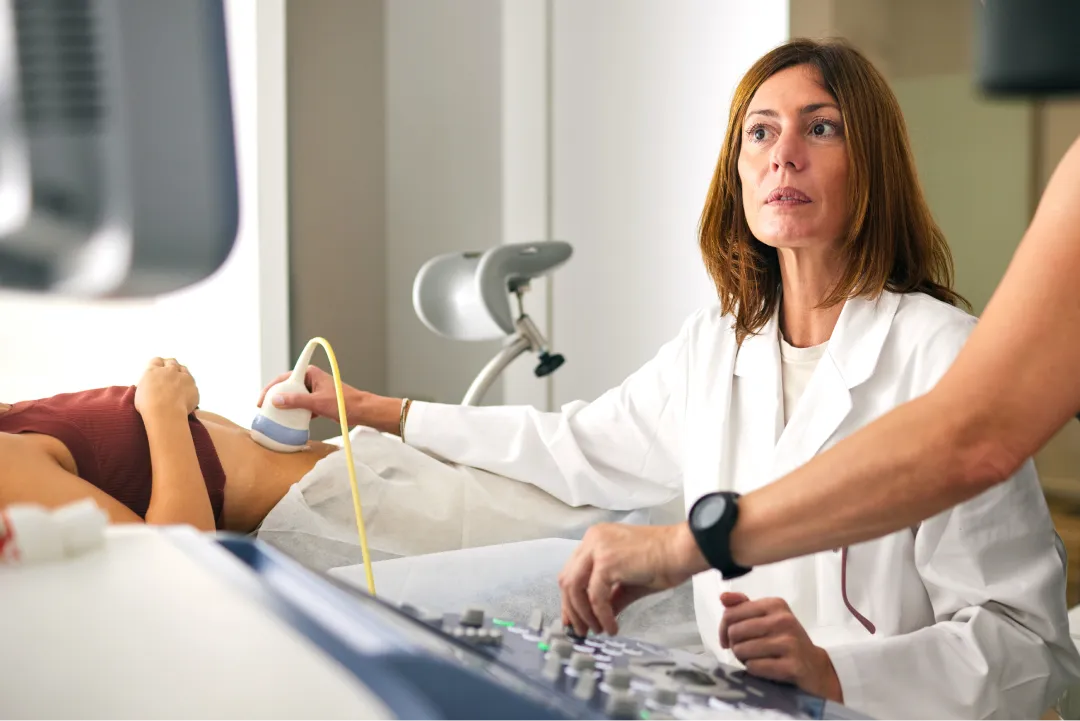
A transvaginal ultrasound can provide information about the ovaries, developing follicles, and uterine lining. It may also be used to monitor ovulation.

During fertility treatment, ultrasound is commonly used to monitor follicle development and assess how the ovaries are responding to medication. 

How are the uterus and fallopian tubes evaluated?

Different tests can provide information about the uterus and fallopian tubes.

A sonohysterogram (sono-HSG) or hysterosalpingogram (HSG) uses ultrasound and fluid placed into the uterus to evaluate the uterine cavity and whether the fallopian tubes appear open. It may help identify concerns such as fibroids, polyps, scar tissue, uterine abnormalities, or tubal blockage.  

A hysteroscopy allows your physician to look directly inside the uterine cavity and may help identify abnormalities such as polyps, fibroids, scar tissue, or inflammation.  

Your fertility specialist will determine which evaluation is appropriate for you.

Does my partner need fertility testing, too?

If sperm is part of your family-building plan, your partner may also be asked to complete fertility testing. A semen analysis is often the first step and can provide information about sperm count, movement, shape, and other factors that may affect fertilization.

Testing may be recommended even when another potential cause of infertility has already been identified, because more than one factor can contribute to difficulty conceiving. Looking at both partners’ reproductive health can help your care team build a more complete picture and recommend treatment based on all the factors involved.

If the semen analysis shows a concern, your care team may recommend additional evaluation or referral to a reproductive urologist.

How long does infertility testing take?

The timing depends on which tests you need. Some tests are scheduled during specific parts of the menstrual cycle, while others can be completed at any time. In some cases, a typical fertility workup can be completed within a single menstrual cycle, although timing varies from person to person.  

Your care team will explain your testing schedule, so you know what to expect at each step. 

What happens after my fertility testing is complete?

Your fertility specialist will review your results with you and explain what they may mean for your fertility. If testing identifies a potential cause, your care team can discuss treatment options based on your results and individual needs.

Sometimes testing does not identify one clear explanation, or more than one factor may be involved. In either case, your results can help guide the conversation about your options and what comes next. 

Ready to take the next step?