









Clinical trials and research opportunities
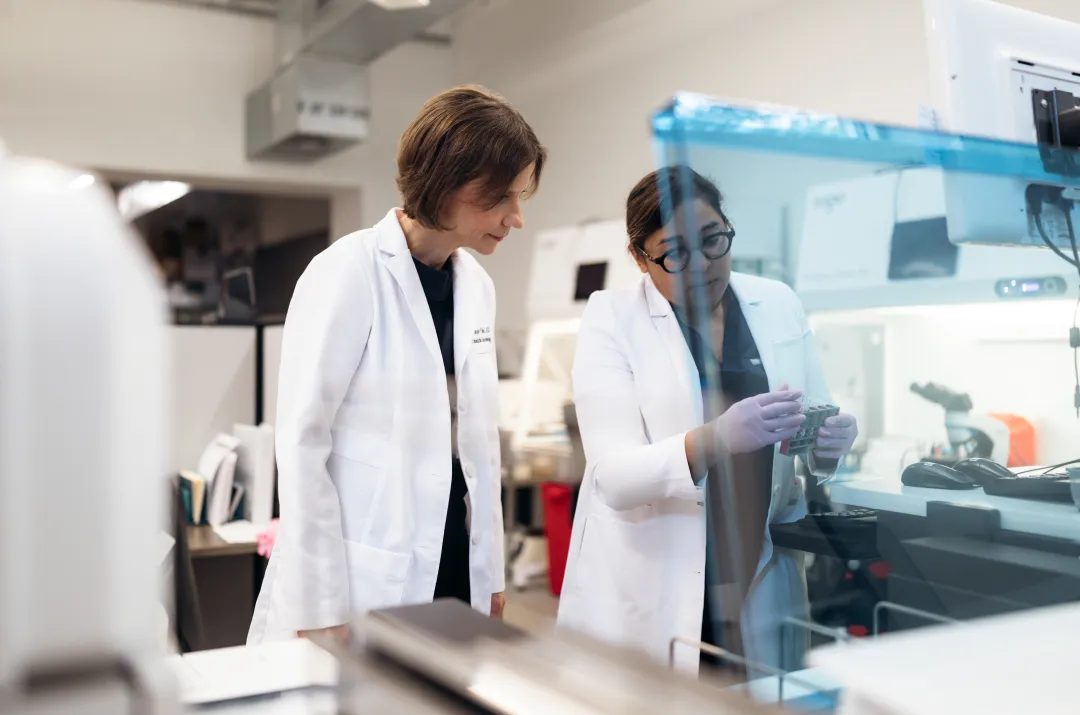
Over decades, thousands of men and women have participated in our clinical trials aimed at improving patient outcomes.
Our research program
Over the years, we have given away thousands of IVF cycles and hundreds of embryo screenings at no cost as part of research program. This is an investment we make to improve patient outcomes and continue to set evidence-based standards in reproductive medicine.
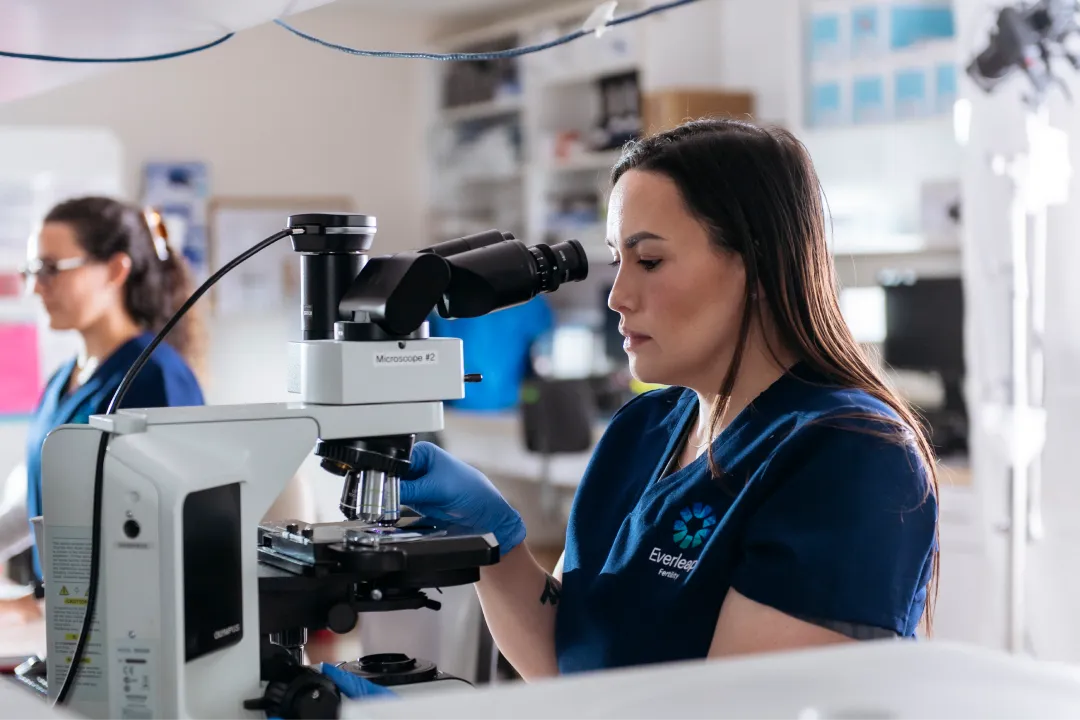
Current research opportunities and past studies our patients have participated in

IMPACT Trial

PIER Trial

VILOCITY Trial

BLISS trial
EPIC trial: Exploring Paternal Age and the Influence on Blastocyst Culture (active)
Do you want to be part of something EPIC?
See if you are eligible for the EPIC Trial which is trying to determine if there is a better way to prepare sperm for the intracytoplasmic sperm injection (ICSI) procedure that may improve IVF outcomes. This study is comparing the use of a microfluidic sperm preparation device (Zymot) as a tool to prepare and select the sperm for the ICSI procedure to the current preparation technique of density grade centrifugation, while also assessing the impact of paternal age on embryo culture. While different sperm preparation techniques are utilized across the country in other IVF labs, at RMA we want to dig deeper to determine if these microfluidic devices improve outcomes for patients in our embryology lab.
What are the different sperm preparation techniques?
The microfluidic sperm preparation technique involves using a microfluidic device, which separates the best moving sperm through tiny channels and chambers. These channels are designed in a way that separates sperm based on their quality and ability to move effectively. The sperm that ends up in the chamber on the other end of the device is then used by the embryologist to select the sperm for the ICSI procedure as they would normally. The thought is that the most motile sperm that can make it through the microfluidic device may have a better chance of creating an embryo because it may be of a higher quality and functional capacity.
Currently, sperm is prepared using density grade centrifugation, which is a process that involves using a machine to spin the sperm. The better sperm tends to settle at the top of the tube after being spun. Then, the sperm is manually selected by an embryologist who picks the best-looking sperm from under a microscope for the ICSI procedure. This is a visual assessment and selection process. The embryologist does not know anything additional about the sperm or its capabilities.
What is the EPIC study?
This is a prospective, split-cohort, randomized controlled trial which seeks to investigate blastocyst formation rates following the ICSI procedure utilizing the two different sperm preparation techniques. This means that participants’ mature eggs will be split into two groups and randomized to see which sperm preparation technique is used for each group for the ICSI procedure. Therefore, one group will receive sperm that was prepared via the microfluidic sperm preparation device and the other group will receive sperm that was prepared via the current density grade centrifugation technique. This is how the researchers will determine if the sperm preparation technique impacts the number of blastocysts that develop. Additionally, the study is double-blinded which means that neither the participant, physician or embryologists making assessments will know which eggs and subsequent embryos were inseminated by each preparation technique. It is important to note that the only difference in this study from routine care is the use of the microfluidic sperm preparation device for insemination of half of the mature eggs retrieved. Otherwise, routine embryology care will be performed.
Who can participate?
You may be eligible if you meet specific ovarian reserve testing criteria, are undergoing your first IVF cycle with PGT-A, are less than 42 years old and desire to transfer your best quality embryo.
You may not be eligible if you are using donor sperm or oocytes or a gestational carrier, have a male partner with very low sperm counts or requires a surgical sperm retrieval procedure, or require additional genetic testing of your embryo(s).
Interested in learning more?
Contact our Cinical Research Team by emailing [email protected] or calling 973-656-2841.
Which location is this clinical trial available at?
List item
Tellus leo condimentum hac mi facilisis vehicula mattis ipsum hendrerit aliquam mattis quam. Praesent at ultricies maecenas mattis vivamus justo suspendisse tempus hac mattis platea diam. Vitae molestie dictum rhoncus; natoque justo platea blandit convallis gravida habitant ultricies. Platea lacinia risus laoreet nibh dolor hac mattis fusce convallis sollicitudin.
IMPACT trial (active)
Want to help us make an IMPACT?
Join a pioneering research study sponsored by IVI RMA focused on advancing assisted hatching (AH) procedures in in vitro fertilization (IVF) treatments. This study aims to investigate whether the timing of AH—either at the cleavage or blastocyst stage—can enhance embryo development and increase the number of embryos reaching the blastocyst stage.
What is assisted hatching?
Assisted hatching (AH) is a technique used during IVF treatments where a small hole is made in the zona pellucida (embryo's outer shell) by the embryologist using a laser. This procedure aims to facilitate embryo growth and development by aiding in the embryo's release from the zona pellucida.
What is the study?
The objective is to investigate if AH at the blastocyst stage improves embryo development compared to AH at the cleavage stage, which is the current practice. If a patient has at least 4 fertilized eggs, which are also day 1 embryos, the fertilized eggs will be split into 2 groups and will be randomly assigned to undergo AH at either the cleavage (day 3) or blastocyst stage (day 5,6 or 7). The other group will receive the alternative AH procedure timing. All other embryology care is the same between groups. The study enables a direct comparison between cleavage and blastocyst stage AH, providing valuable insights into embryology outcomes and transfer success.
Who can participate?
Participants undergoing an IVF cycle with preimplantation genetic testing for aneuploidy (PGT-A) may qualify for this study. You may be eligible if you meet specific ovarian reserve testing criteria, have a BMI less than 38kg/m2, are less than 42 years old and desire to transfer your best quality embryo.
You may not be eligible if you have had a prior cycle where no embryos developed to the blastocyst stage, have experienced more than one failed embryo transfer, are using donor oocytes or a gestational carrier, have a male partner with very low sperm counts or requires a surgical sperm retrieval procedure, have a thin lining or require additional genetic testing of your embryo(s).
Which location is this clinical trial available at?
List item
Tellus leo condimentum hac mi facilisis vehicula mattis ipsum hendrerit aliquam mattis quam. Praesent at ultricies maecenas mattis vivamus justo suspendisse tempus hac mattis platea diam. Vitae molestie dictum rhoncus; natoque justo platea blandit convallis gravida habitant ultricies. Platea lacinia risus laoreet nibh dolor hac mattis fusce convallis sollicitudin.
List item
Tellus leo condimentum hac mi facilisis vehicula mattis ipsum hendrerit aliquam mattis quam. Praesent at ultricies maecenas mattis vivamus justo suspendisse tempus hac mattis platea diam. Vitae molestie dictum rhoncus; natoque justo platea blandit convallis gravida habitant ultricies. Platea lacinia risus laoreet nibh dolor hac mattis fusce convallis sollicitudin.
PIER trial: Platelet Rich Plasma for Insufficient Endometrium: A Randomized Controlled Trial (active)
Have you been diagnosed with thin uterine lining?
What is PRP?
What is the PIER study?
This is a prospective, double-blind, placebo-controlled, randomized controlled trial which is the gold standard for determining treatment effectiveness. This means that participants will be randomly assigned, like the flip of a coin, to either receive the PRP infusion (intervention group) or a mock infusion of normal saline (control group). This is how the researchers will determine if the PRP is beneficial by comparing it to an inactive or placebo infusion. Additionally, neither the participant nor the primary care team will be aware of which infusion the participant received until after the pregnancy test has resulted.
Who can participate?
You may not be eligible if you have had abnormal development of your uterus, a present uterine defect that requires surgical intervention, require blood thinners during treatment or have a history of or are at an increased risk of blood clots.
Which location is this clinical trial available at?
This clinical trial is only available to patients at our New Jersey and Philadelphia locations.
Interested in learning more?
Contact our Cinical Research Team by emailing [email protected] or calling 973-656-2841.
List item
Tellus leo condimentum hac mi facilisis vehicula mattis ipsum hendrerit aliquam mattis quam. Praesent at ultricies maecenas mattis vivamus justo suspendisse tempus hac mattis platea diam. Vitae molestie dictum rhoncus; natoque justo platea blandit convallis gravida habitant ultricies. Platea lacinia risus laoreet nibh dolor hac mattis fusce convallis sollicitudin.
VILOCITY trial (ended)
Do you want to contribute to the future of in vitro fertilization (IVF)?
See if you are eligible for the VILOCITY Trial which is trying to determine whether the use of a benchtop incubator for embryo culture improves the number of embryos reaching the blastocyst stage (i.e. the stage of development when the embryo is biopsied and frozen) in comparison to a box incubator. While the benchtop incubator is utilized across the country in other IVF labs, our lab has traditionally used the box incubator. At RMA we want to validate the use of the benchtop incubator in our embryology lab through this trial.
What is an incubator? And why is it important for IVF?
The incubator is where the embryo grows and develops in the embryology lab and it plays a critical role in the overall IVF process. It provides the environment that helps nurture embryo growth. There are a large variety of incubator types, large and small with an increasing array of features. Traditionally, large box-type incubators have been used in the IVF lab, but over time, medium and small benchtop incubators have become available.
What is the VILOCITY study?
This is a prospective, split-cohort, randomized controlled trial which seeks to investigate blastocyst formation rates following culture in a benchtop incubator compared to a box incubator. This means that participants’ mature eggs will be split into two groups and randomized to see which incubator each group is cultured in. Therefore one group will be cultured in the benchtop incubator and the other group will be cultured in the box incubator. This is how the researchers will determine if the type of incubator impacts the number of blastocysts that develop. Additionally, the study is double-blind which means that neither the participant, physician or embryologists making assessments will know which eggs and subsequent embryos were cultured in which incubator. It is important to note that the only difference in this study from routine care is the use of the benchtop incubator for half the eggs and embryos. Otherwise, routine embryology care will be performed.
Who can participate?
You may be eligible if you meet specific ovarian reserve testing criteria, have a BMI less than 35kg/m2, are less than 42 years old and desire to transfer your best quality embryo.
You may not be eligible if you have had a prior cycle where no embryos developed to the blastocyst stage, have experienced more than one failed embryo transfer, are using donor oocytes or a gestational carrier, have a male partner with very low sperm counts or requires a surgical sperm retrieval procedure, or require additional genetic testing of your embryo(s).
Interested in learning more?
Contact our Cinical Research Team by emailing [email protected] or calling 973-656-2841.
List item
Tellus leo condimentum hac mi facilisis vehicula mattis ipsum hendrerit aliquam mattis quam. Praesent at ultricies maecenas mattis vivamus justo suspendisse tempus hac mattis platea diam. Vitae molestie dictum rhoncus; natoque justo platea blandit convallis gravida habitant ultricies. Platea lacinia risus laoreet nibh dolor hac mattis fusce convallis sollicitudin.
List item
Tellus leo condimentum hac mi facilisis vehicula mattis ipsum hendrerit aliquam mattis quam. Praesent at ultricies maecenas mattis vivamus justo suspendisse tempus hac mattis platea diam. Vitae molestie dictum rhoncus; natoque justo platea blandit convallis gravida habitant ultricies. Platea lacinia risus laoreet nibh dolor hac mattis fusce convallis sollicitudin.
BLISS trial: Blastulation Improvement by Sperm Selection (ended)
Are you about to undergo your first IVF cycle with ICSI procedure and PGT-A testing?
You may be eligible for the BLISS study which is trying to determine if there is a better way to select sperm for the ICSI procedure and improve IVF outcomes.
What is ICSI?
ICSI stands for intracytoplasmic sperm injection (ICSI) and it is a procedure performed by embryologists where a single sperm is injected into each egg in an attempt to fertilize the egg. To select the sperm for this procedure, the embryologist looks in a microscope at the sperm sample provided for the egg retrieval procedure and picks the best-looking sperm.
What is the BLISS study?
The study is looking at a new sperm selection technique that allows sperm to attach or bind (as it would if fertilizing an egg within the body) to the zona pellucida (outer shell) of an immature egg from the egg retrieval procedure. The sperm that bind are selected by the embryologist for the ICSI procedure. The theory is that the sperm that are able to bind may be better sperm to use for the procedure and may improve outcomes.
What happens in the study?
The eggs from the egg retrieval procedure will be split into 2 groups and randomly assigned to which sperm selection method each group receives. Therefore, half of the eggs will receive the new sperm selection technique and the other half will receive the routine, embryologist sperm selection technique. The remainder of the embryo culture process is per routine. If you have at least one normal embryo for transfer, this will be transferred in a subsequent frozen embryo transfer cycle. You will not know which group your embryo(s) was generated from until your study participation is complete.
Who can participate?
If you are less than 42 years old, had normal ovarian reserve during testing and have at least 4 mature eggs and 1 immature egg after your egg retrieval you are likely eligible. There must also be at least 100,000 total motile sperm in the semen sample produced for the egg retrieval procedure.
Interested in learning more?
Contact our Cinical Research Team by emailing [email protected] or calling 973-656-2841.
List item
Tellus leo condimentum hac mi facilisis vehicula mattis ipsum hendrerit aliquam mattis quam. Praesent at ultricies maecenas mattis vivamus justo suspendisse tempus hac mattis platea diam. Vitae molestie dictum rhoncus; natoque justo platea blandit convallis gravida habitant ultricies. Platea lacinia risus laoreet nibh dolor hac mattis fusce convallis sollicitudin.
List item
Tellus leo condimentum hac mi facilisis vehicula mattis ipsum hendrerit aliquam mattis quam. Praesent at ultricies maecenas mattis vivamus justo suspendisse tempus hac mattis platea diam. Vitae molestie dictum rhoncus; natoque justo platea blandit convallis gravida habitant ultricies. Platea lacinia risus laoreet nibh dolor hac mattis fusce convallis sollicitudin.
List item
Tellus leo condimentum hac mi facilisis vehicula mattis ipsum hendrerit aliquam mattis quam. Praesent at ultricies maecenas mattis vivamus justo suspendisse tempus hac mattis platea diam. Vitae molestie dictum rhoncus; natoque justo platea blandit convallis gravida habitant ultricies. Platea lacinia risus laoreet nibh dolor hac mattis fusce convallis sollicitudin.