

Guides
Your guide to IVF









Guides
1

You'll take fertility medications to help your ovaries develop multiple eggs during the cycle. Throughout this stage, we’ll monitor your progress with bloodwork and ultrasounds, adjusting your medications and treatment as needed.
2

Once your eggs are ready, they are collected during a short procedure performed under sedation. We’ll explain how to prepare, what to expect during the procedure, and what recovery typically looks like.
3

After retrieval, mature eggs are fertilized with sperm in our laboratory. Our embryology team carefully monitors fertilization and follows the embryos as they develop.
4
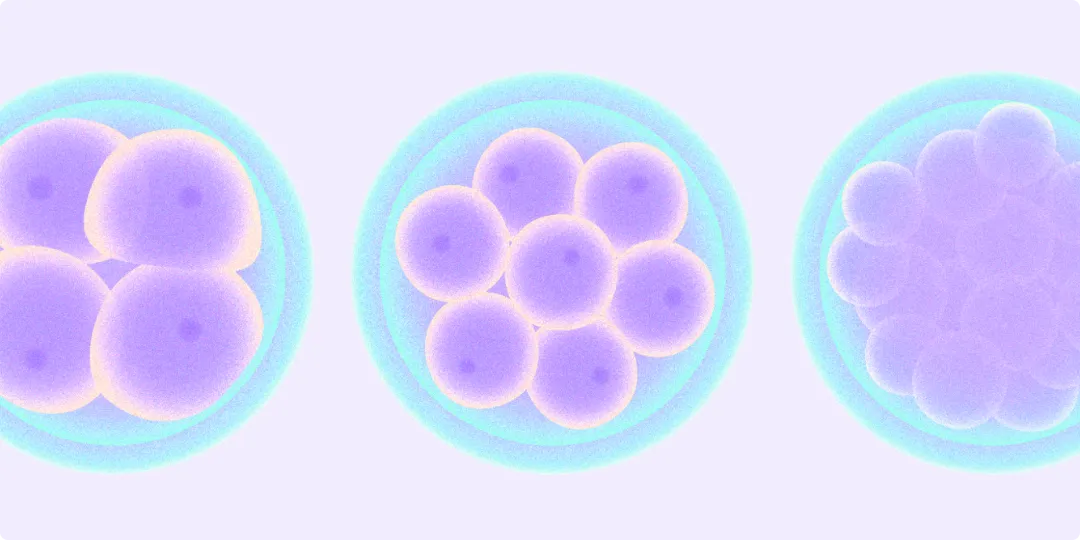
Over the next several days, your embryos continue developing under carefully controlled laboratory conditions. We'll share updates as they become available and help you understand what each stage of development means.
5

Some patients choose to do preimplantation genetic testing (PGT) of their embryos prior to transfer. We’ll discuss whether testing makes sense for you, what it can and cannot tell us, and how the results may help guide decisions about embryo transfer.
6

Depending on your treatment plan, an embryo may be transferred or your embryos may be frozen for future use. We'll talk through your options and personalize your treatment plan based on your unique needs, circumstances, and goals.
7
Once your transfer is complete, you’ll wait a short time before doing a blood test to check for pregnancy. We’ll guide you through the timing, what to expect while you wait, and the next steps once your results are available.
#hxac
Preparation is an important first step in a well-planned IVF journey.
Before treatment begins, we’ll take time to understand your medical history, your fertility goals, and do any testing that can help us personalize your care.
Using this information, we’ll create a treatment plan customized to address your needs and goals. We’ll review your medications, timing, appointments, and what to expect throughout the process so you feel prepared for what’s ahead.
You won't have to navigate this alone. We'll help you understand what's happening, what comes next, and why each step matters.
#zndx
This phase of IVF focuses on using fertility medications to stimulate your ovaries to develop multiple eggs for retrieval.
You’ll take fertility medications each day and return for ultrasounds and bloodwork so we can monitor how your follicles are growing and how your body is responding. These visits guide our decisions about whether your medications need to be adjusted and when your eggs are ready for retrieval.
Everyone responds differently, so IVF doesn’t follow the exact same timeline for every patient. Your clinician and care team will follow your individual progress closely and adjust your treatment as needed.
#vtdz
Egg retrieval is often the milestone patients think about most, and you may feel both excited and nervous as the day approaches.
Once your eggs are ready, you’ll take a final medication – often called a “trigger shot” – to prepare them for retrieval. About 35-36 hours later, your eggs are collected during a brief procedure performed under sedation. Patients go home the same day, and symptoms afterwards are usually minimal.
Before your egg retrieval procedure, we’ll make sure you know how to prepare, what will happen that day, and what to expect during your recovery.
#gvkr
After retrieval, attention shifts to the laboratory and waiting for your first update can bring a new kind of anticipation.
Our embryology team evaluates the eggs that were retrieved and identifies which ones are mature. Mature eggs are then combined with sperm and the following day the embryology team checks to see which eggs fertilized normally.
It’s important to know that not every egg retrieved will be mature, and not every mature egg will fertilize. Your care team will keep you updated and help you understand what your results mean for the next stage.
#zatv
The next several days can involve a lot of waiting as you hope to see your embryos continue to develop.
After fertilization, embryos are carefully monitored in the laboratory. Over 5-7 days, some may reach the blastocyst stage, which is when an embryo can typically be biopsied for testing, frozen, or considered for transfer.
It’s normal for the number of developing embryos to decrease along the way. Not every egg becomes a blastocyst, and this natural drop-off can be one of the harder parts of IVF. We’ll keep you informed as results become available and help put each update into context.
#hgij
If preimplantation genetic testing (PGT) is part of your treatment plan, you may have questions about what the results can and can't tell you.
To perform testing of an embryo, a small biopsy is performed on the embryo, and the sample of cells is sent to a specialized laboratory for testing. The embryo is then frozen while you wait for the results. Depending on the type of testing being performed, PGT may provide information about the number of chromosomes in an embryo or specific genetic conditions.
PGT may not be right for every patient, and no genetic test can provide every answer about an embryo. We’ll explain the benefits and limitations of testing in your individual case and help you understand how the results may be helpful in guiding decisions around embryo transfer and next steps.
#roxg
Embryo transfer is a brief, minimally invasive procedure that typically does not require sedation.
Using a thin catheter guided by ultrasound, we place your embryo directly into the uterus. Most patients can return to their usual activities the same day.
If your treatment plan includes freezing embryos, we use a rapid-freezing process called vitrification. We'll explain what this means for your timeline and how your frozen embryos may be used in a future cycle.
The period between embryo transfer and your pregnancy test is often called the two-week wait. This can be one of the more difficult parts of IVF, and it's completely normal to experience a mix of hope, uncertainty, and questions along the way. We’ll make sure you know which medications to continue, when to test, and when to contact your care team so that even during the wait, you know what to expect and what comes next.
However your cycle unfolds, take a moment to recognize everything it took to get here. You’ve moved through each step with patience, resilience, and trust in a process that can sometimes feel uncertain. Reaching this point is meaningful, and whatever comes next, we will be here to support and guide you through.
#iboc
The ovarian stimulation and egg retrieval phase of IVF typically takes about two weeks, but the full timeline varies depending on your treatment plan. If your embryos are frozen, genetically tested, or transferred in a later cycle, the process may take several additional weeks. We will outline your expected timeline before treatment begins and keep you updated along the way.
Most patients experience temporary mild discomfort rather than significant pain. Injections may cause brief stinging or soreness, and you may notice some bloating or cramping as your ovaries respond to treatment. Egg retrieval is performed under sedation to keep you comfortable. We'll explain what to expect at each stage and how to manage any discomfort during the process.
For most patients, transferring a single embryo is recommended to reduce the risks associated with a multiple pregnancy. The number of embryos transferred depends on several factors, including your age, embryo quality, treatment history, and individual circumstances. We'll discuss these factors with you and recommend a personalized approach that best supports a healthy pregnancy for you.
Side effects can vary, but some patients experience bloating, cramps, headaches, mood changes, or mild discomfort at injection sites. Most symptoms are temporary and go away shortly after treatment. We'll explain what to expect and when a symptom warrants a call.
In most cases, you can stay active during IVF, but your exercise routine may need to change as your ovaries become enlarged during stimulation. Your care team may recommend avoiding high-impact or rigorous exercise during certain phases of treatment and will let you know what is safe at each stage.
While there's no single thing you can do to guarantee IVF success, taking care of your overall health, including your mental health, can help you feel your best and optimize your treatment cycle. Focus on a well-balanced diet, regular physical activity, good quality sleep, limited or no alcohol intake, and avoid smoking and recreational drugs. Follow your medication and treatment instructions carefully and don't hesitate to ask questions if you're unsure of anything. Your doctor and care team can discuss any other specific recommendations for you.
Embryo transfer is a brief, minimally invasive procedure that typically does not require sedation. Embryos can remain frozen for many years, and current evidence suggests that long-term storage itself does not significantly reduce their potential for future use. Your care team will explain your clinic's storage policies and options and guide you through any decisions you may need to make in the future regarding storage of your embryos.
#apqp
While every patient's experience and family-building goals are unique, we're there at every step of the way.